Emergency burst pipe repair situations can happen without warning and quickly turn a normal day into a stressful one. A burst pipe can flood rooms, damage furniture, and increase repair costs, making it essential to act fast and follow the right steps from the moment you notice the problem.
When water starts spreading through your home, knowing how to respond can make a huge difference. Understanding the basics of emergency burst pipe repair helps you minimise water damage, protect your property, and communicate effectively with a plumber while waiting for professional assistance.
Why Pipes Burst in Perth
Before we dive into fixes, let’s talk about why pipes burst. In Perth, it often feels like one minute you have ice in your drink, the next your kitchen’s filling up. It turns out our unique WA conditions are prime for pipe trouble. Perth’s water pressure can be really high – think 500–800 kPa in some suburbs – and constant strain can cause pipes to give way.
Older homes (pre-1990) often have ageing copper or galvanised plumbing that corrodes internally. Roots from tall trees can snake into underground pipes, and those salty sea breezes in coastal spots like Scarborough speed up corrosion.
Even quick cold snaps in winter make pipes contract and crack. The result? Sudden leaks that ruin your day (and floorboards), often leading to a need for emergency burst pipe repair.
Knowing these causes helps you spot trouble early. For example, if you live in a high-pressure area or near the coast, you might be due for a plumbing check. Regular inspections can catch small leaks or corrosion before Ka-boom, the pipe bursts. Taking preventive action can reduce the likelihood of needing emergency burst pipe repair and help protect your home from costly water damage.
Being aware of these warning signs also makes it easier to respond quickly if a pipe fails unexpectedly. The sooner you identify a problem, the smoother the emergency burst pipe repair process will be and the less disruption you’ll face.
Immediate Steps After a Pipe Bursts
So, water’s spraying everywhere – now what? First things first: Turn off the main water supply. Find your stopcock (often near the water meter at the front of the house) and shut it off. If it’s stuck, call Water Corporation’s emergency line at 13 13 75.
This is one of the most important actions during an emergency burst pipe repair situation. Next, cut the power from the main switchboard if any water’s near outlets or appliances. (Trust me, you don’t want electricity mixing with water!)
Now, contain the leak to keep damage minimal. Place buckets under the leak, lay down towels, and catch what you can. If it’s a small crack on an accessible pipe, a quick clamp or pipe-repair tape can help stem the flow. These DIY tricks are like a band-aid – they buy time, but they’re not permanent fixes. While these measures help, a proper emergency burst pipe repair is still needed to prevent further issues.
Finally, document the damage: take photos or a video of the burst pipe and any flooding. Insurance companies love dated evidence, so this little chore can speed up your claim later. Once you’ve done all that, it’s time to call an expert for a professional emergency burst pipe repair and a lasting solution.
Temporary Fixes to Stop the Leak
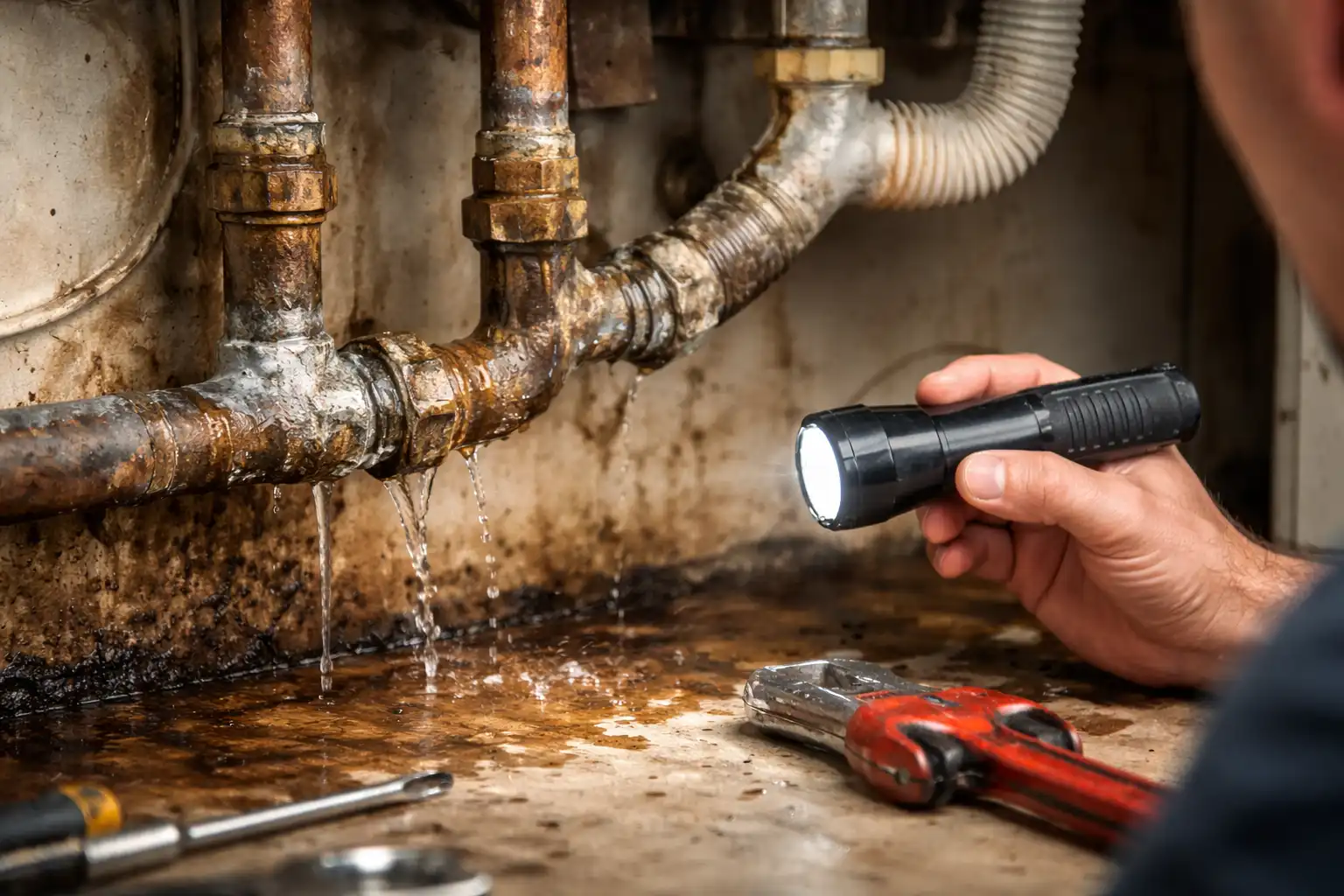
While you wait for help, a few temporary fixes can save you big headaches. Ideally, everyone should have a simple emergency plumbing kit at home. Think of it like a first-aid kit, but for pipes. Your kit should include:
- Plumber’s repair tape or rubber tape: Wrap it tightly around small leaks.
- Epoxy putty: Press it into cracks; it hardens around the hole.
- Rubber patches and C-clamps: For tougher leaks, clamp a rubber patch over the leak.
- Adjustable spanner (wrench) and torch: Handy for tightening valves or working in dark corners.
With these tools, you can slap a quick fix on many leaks. For example, if a copper pipe cracks, wrap it with rubber and clamp it – it might hold until the plumber arrives. But remember: these are temporary stop-gaps.
They may leak a little or fail under pressure. Once you’re done with the bandage job, don’t be tempted to ignore the problem. Contact a plumber as soon as possible for a proper repair.
Draining and Drying Out
Water is sneaky – it gets behind walls and under floors in seconds. After stopping the flow, you need to start drying everything out. Grab mops, towels, buckets, even a wet/dry vacuum if you have one. Remove wet rugs and lift furniture off the floor.
Open windows and fans to increase airflow; in Perth’s humid climate, mould can start growing in 24–48 hours. These actions are an important part of emergency burst pipe repair because they help limit further damage to your property.
If the flood is serious, you might want to hire a water damage restoration service for extra help. Pros have heavy-duty pumps, dehumidifiers, and moisture-detection tools (like infrared cameras) to find hidden damp spots. Quick drying keeps your home and health safe while supporting a successful emergency burst pipe repair process.
Even after visible water is removed, continue monitoring affected areas for lingering moisture. Thorough drying is one of the most overlooked yet essential steps in emergency burst pipe repair, helping to prevent mould growth, structural damage, and costly future repairs.
When to Call an Emergency Plumber
Now, how do you know when DIY just won’t cut it? The truth is, a burst pipe always needs professional attention. Emergency plumbing repair isn’t just a weekend project. Even a “quick patch job” often hides larger issues. So, once the immediate leak is under control, call an emergency plumber. In Perth you’re lucky – there are 24/7 burst pipe repair services ready to roll.
Here’s how to choose a good one:
- Licensing and Insurance: Always hire a plumber with a valid WA plumbing licence (PL number) and insurance. You can also check official WA Building Advice resources to understand plumbing regulations, licensing requirements, and consumer guidance before hiring a professional plumber.
- 24-Hour Service: Make sure they offer 24/7 emergency plumbing repair and are local to Perth.
- Transparent Pricing: Ask for call-out fees and hourly rates up-front. Emergency services often charge more after hours. Expect around $120–$250 per hour plus a call-out fee (often $50–$150).
- Reviews and References: Look for plumbers with strong local reviews. Word of mouth is gold.
According to one Perth plumbing guide, emergency plumbers typically charge from “$150–$350” just for the call-out on an after-hours visit. But they can stop more damage – so it’s worth it.
Also, don’t forget the emergency lines: if your pipe burst involves the mains water supply or meter, call the WA Water Corporation at 13 13 75. They handle burst mains and major leaks outside your house.
Professional Repair vs. DIY
Once your plumber arrives, what happens? The plumber will assess the burst pipe and decide how to fix it. Permanent solutions can include: cutting out the damaged section and replacing it, re-soldering or re-coupling joints, or even pipe relining (slipping a new liner inside the old pipe).
The right method depends on where the break is and how old your plumbing is. An emergency burst pipe repair specialist will also identify any underlying issues that may have contributed to the pipe failure.
A quick patch (like a clamp) might hold, but an emergency burst pipe repair job will likely end up with a new piece of pipe. That’s especially true if the pipe is old or corroded. For example, replacing a small section is usually a few hundred dollars, whereas replacing pipe under a concrete floor can be thousands. After repair, the plumber will pressure-test the line to ensure it’s truly stopped leaking.
Be prepared: pipes burst means water damage, and clean-up is part of the job. Your plumber might coordinate with restoration pros to remove remaining water and dry things out. They’ll also inspect for hidden issues (mould, warped timber, etc.) and advise you on fixes. An emergency burst pipe repair isn’t over until everything’s dry and back to normal.
Costs and Insurance
A word on money: Burst pipe repairs can be expensive. In Perth, the true cost often goes beyond a simple fix. Emergency call-outs are $150–$350, small repairs about $250–$800, and if pipes need full replacement it can top $5,000–$15,000+.
Then add water extraction and drying, which might be another $500–$3,000. (All these figures are rough Perth estimates.) In total, a busted pipe cleanup might run $8,500–$15,000 or more.
Most home insurance policies do cover sudden burst pipe damage (check your policy!). Insurers will want evidence you turned off water and called a plumber quickly. In fact, the average Perth burst pipe claim is around $5,000–$15,000. Always take photos, keep receipts, and follow up with your insurance company. That way you’re not stuck paying the whole repair bill yourself.
Preventing Future Emergencies
Now here’s the best tip: Don’t let it happen again! After the crisis, take steps to prevent future bursts. Get old pipes inspected and replaced if needed. If you live in a high-pressure area, install a pressure-reducing valve on the main line. Insulate any pipes exposed to cold or sun. Check for plumbing red flags yearly (weird noises, dampness, rust).
Some people even install water leak detection sensors in vulnerable spots. These devices beep or shut off valves automatically when they sense water. And keep your emergency plumbing kit restocked. Make it a habit to test your stopcock – when was the last time you turned it?
As one Perth guide noted, bursting pipes are often due to “ageing pipes, pressure problems or coastal conditions” – all things you can plan for. A small investment in maintenance today can save a flood of trouble tomorrow.
Conclusion
A burst pipe can turn your life upside down fast. But by acting quickly and smartly, you can control the chaos. Remember the emergency burst pipe repair checklist: shut off water and power, contain the leak, dry things out, and call a professional plumber immediately.
Keep an eye on Perth-specific issues (pressure, corrosion, tree roots) and stay on top of maintenance. If you follow these tips, you’ll be the hero who nipped disaster in the bud – or at least limited the damage to a few wet towels and a story to laugh about later.
Got any plumbing war stories or questions? Drop them below and let’s chat. And if you’re currently knee-deep in water, don’t hesitate – pick up the phone and get a 24/7 emergency plumber on the line. The sooner you act, the less the damage (and cost) will be.
FAQs
What exactly is considered a plumbing emergency?
Any leak or break that risks flooding, property damage, or safety hazards is an emergency. That includes burst water pipes, gas leaks, major overflows, or complete loss of water. If you’re seeing water pouring out, call an emergency plumber or dial 000 if it’s life-threatening (e.g. sparks from water).
Can I fix a burst pipe myself?
You can do temporary fixes to minimize damage (clamp or tape a leak), but long-term repair requires a pro. Emergency burst pipe repair services use proper tools and certified plumbing methods. Trying a DIY fix as a permanent solution can lead to bigger bursts later on.
How do I minimize damage until help arrives?
Shut off the main water immediately, then turn off electricity if safe. Collect the leaking water in buckets or tubs, and mop up what you can. Temporary patches (rubber and clamp, epoxy, tape) can help. Remove possessions from the wet area and prop up wet carpets or rugs to air-dry.
What should I include in an emergency plumbing kit?
A basic kit can save your home. At minimum: plumber’s rubber tape and repair tape, epoxy putty, spare clamps and small rubber patches, a wrench or adjustable spanner, a bucket, and a torch. Keep it together in an easy-to-access box.