Imagine your plumbing as a hidden world beneath Perth’s streets – twisting tunnels filled with surprises. You might dread unearthing a cracked pipe or blockage under your lawn, but thanks to CCTV camera pipe inspections, there’s no need to grab a shovel first. With a tiny camera on a cable, technicians can snake through drains and sewers to find leaks, roots, and damage in real time.
It’s like sending a miniature explorer into your pipes. I remember watching a Perth plumber carefully feed a CCTV camera down a home drain: the live video on his tablet showed every corner of the pipe, pinpointing exactly where a stubborn blockage lurked. No guesswork, no bulldozers – just precision. In fact, even the City of Perth schedules regular CCTV surveys of its stormwater pipes “to ensure the network is in good condition and to identify possible risks”. If the council trusts this high-tech trick, we should too.
What is a CCTV Camera Pipe Inspection?
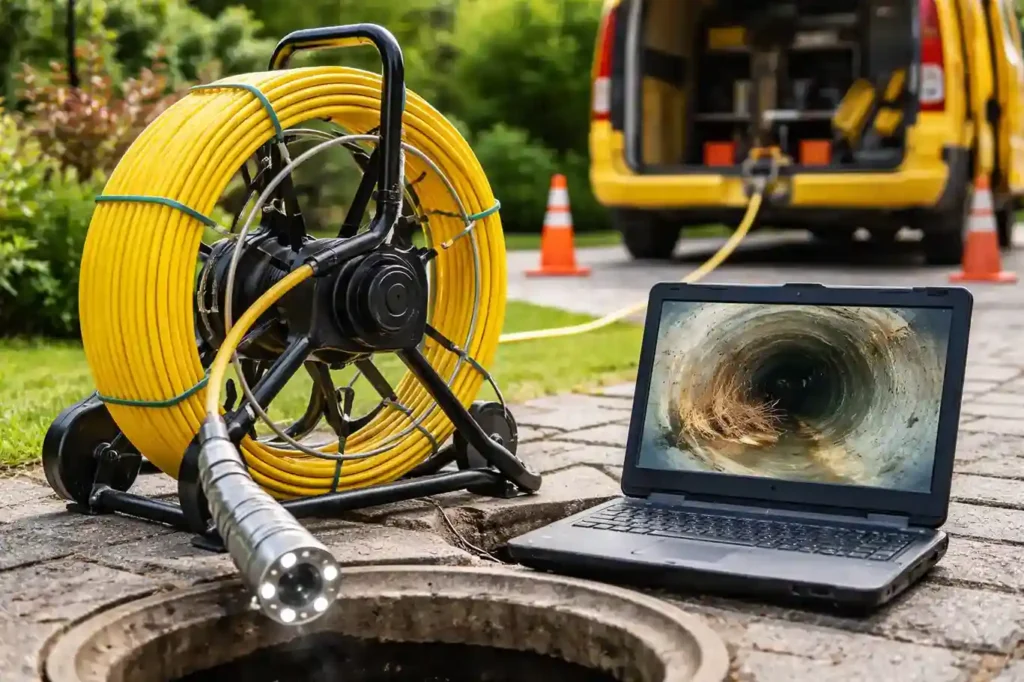
At its core, a CCTV camera pipe inspection (also called a drain camera inspection) involves lowering a small video camera into your plumbing system to see inside pipes without digging them up. Think of it like a periscope for your drains. The camera is attached to a flexible cable or a remote-controlled crawler that can roll long distances and navigate bends.
As the camera moves, it sends high-definition footage to a monitor so a technician can watch live. This means they can spot issues – blocked debris, cracks, corrosion or stray tree roots – the moment they appear. The camera often has a built-in transmitter (“sonde”) that allows plumbers to locate problems with pinpoint accuracy on the ground above, so repairs can be targeted exactly where needed.
Why go through all this trouble? Because digging up driveways and lawns is expensive, messy and time-consuming. Instead, a CCTV camera pipe inspection is non-invasive – you keep your garden intact while the camera does the exploring. After the inspection, you get a detailed video report (often with maps or charts) showing exactly what’s wrong, where it is, and how bad it might be. It’s a bit like getting a doctor’s diagnosis for your pipes.
Why Use CCTV Camera Pipe Inspections?
Using a CCTV camera pipe inspection instead of traditional methods saves a ton of trouble. First, it precisely locates problems – no more guessing which pipe or manhole is the culprit. You’ll know if it’s a tree root breach, a crushed pipe, grease build-up or a mysterious foreign object. Second, it saves time and money.
As one Perth expert explains, you avoid the hassle of tearing open pipes by trial and error. The camera finds the issue quickly so you can fix it fast, preventing ongoing damage and costlier repairs down the road. For example, if you have a stubborn blockage, the camera shows whether it’s just a clogged lip of soap or a full-blown collapsed pipe with roots intruding.
Here are a few key benefits:
Non-destructive inspection:
As the no-dig philosophy goes, a CCTV camera inspection lets technicians “see inside your pipes and easily identify blockages, damage, cracks, corrosion, or tree root intrusion, without needing to dig”.
Cost-effective:
By quickly diagnosing the exact cause, you avoid unnecessary excavation. One Perth plumber notes that CCTV saves you from ripping apart your sewer lines “before being aware” of the real problem, leading to faster, cheaper repairs.
Time-saving:
The live feed means instant answers. Instead of days of trial-and-error, you get video proof of the issue on the spot.
Accurate reporting:
After the inspection, you receive a comprehensive report (often with footage clips and marked-up plans) showing what’s under your property. This helps plumbers or engineers plan repairs precisely and even serves as documentation for compliance or insurance.
Preventative maintenance:
Regular CCTV checks are a great way to catch slow leaks or early cracks. Experts recommend inspecting every 1–2 years for homes. This “catch problems before they escalate” and preserve your pipes before a disaster strikes.
These advantages make CCTV inspections popular for blocked drains, home maintenance or new-build approvals. As Nuflow (a national pipe repair firm) sums it up: early detection of hidden issues saves time, money and stress, helping you make informed decisions on pipe maintenance.
How CCTV Camera Pipe Inspections Work (Step-by-Step)
A CCTV camera pipe inspection might sound high-tech, but the basic process is straightforward. It usually follows these steps:
Access the pipes:
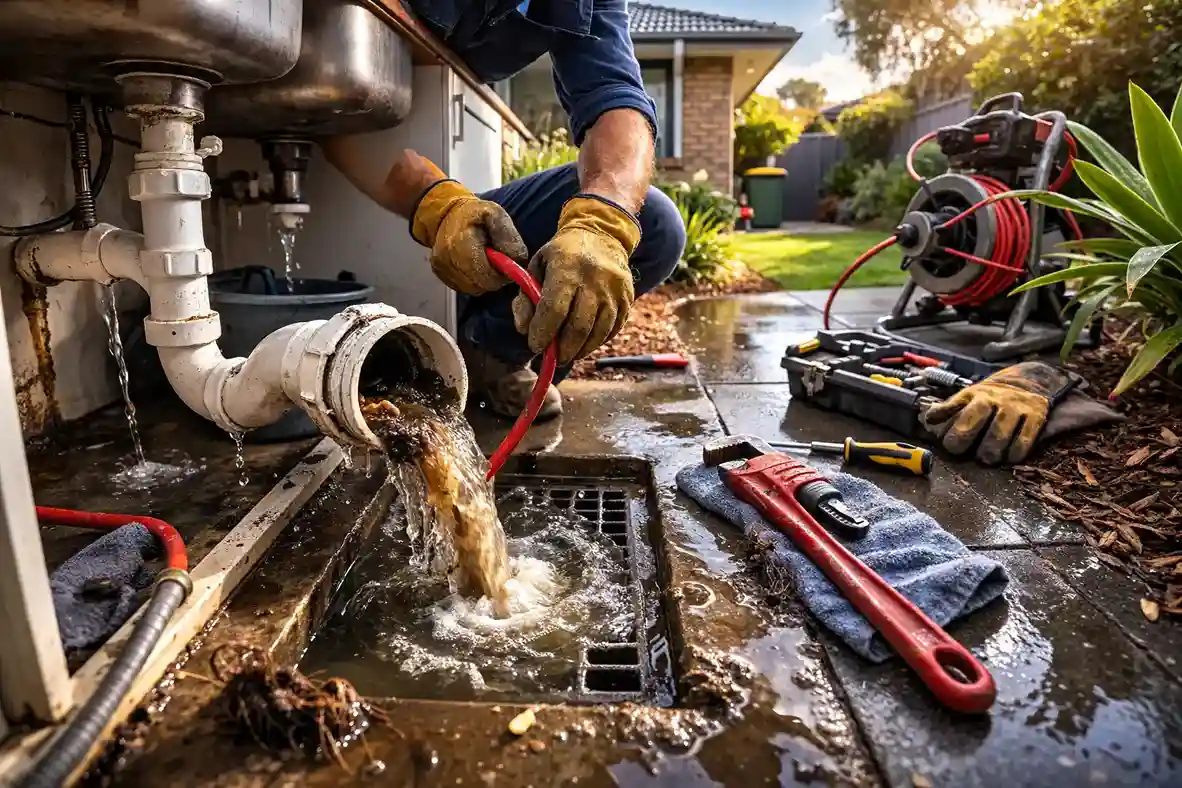
The plumber locates an access point (like a drain cover or inspection port) where the camera can enter. For large jobs, this might be a manhole; for household plumbing, it could be a toilet drain or cleanout fitting. In tight spots, a small hole or existing drain opening is all that’s needed.
Insert the camera:
The flexible cable with the camera head is fed into the pipe. Sometimes the camera is mounted on a remote-controlled wheeled crawler (a bit like a tiny tank) to push it longer distances underground. The technician guides the cable carefully through bends, junctions and traps. Modern camera heads often have 360-degree rotation, letting you scan every part of the pipe’s circumference (no blind spots).
Live video monitoring:
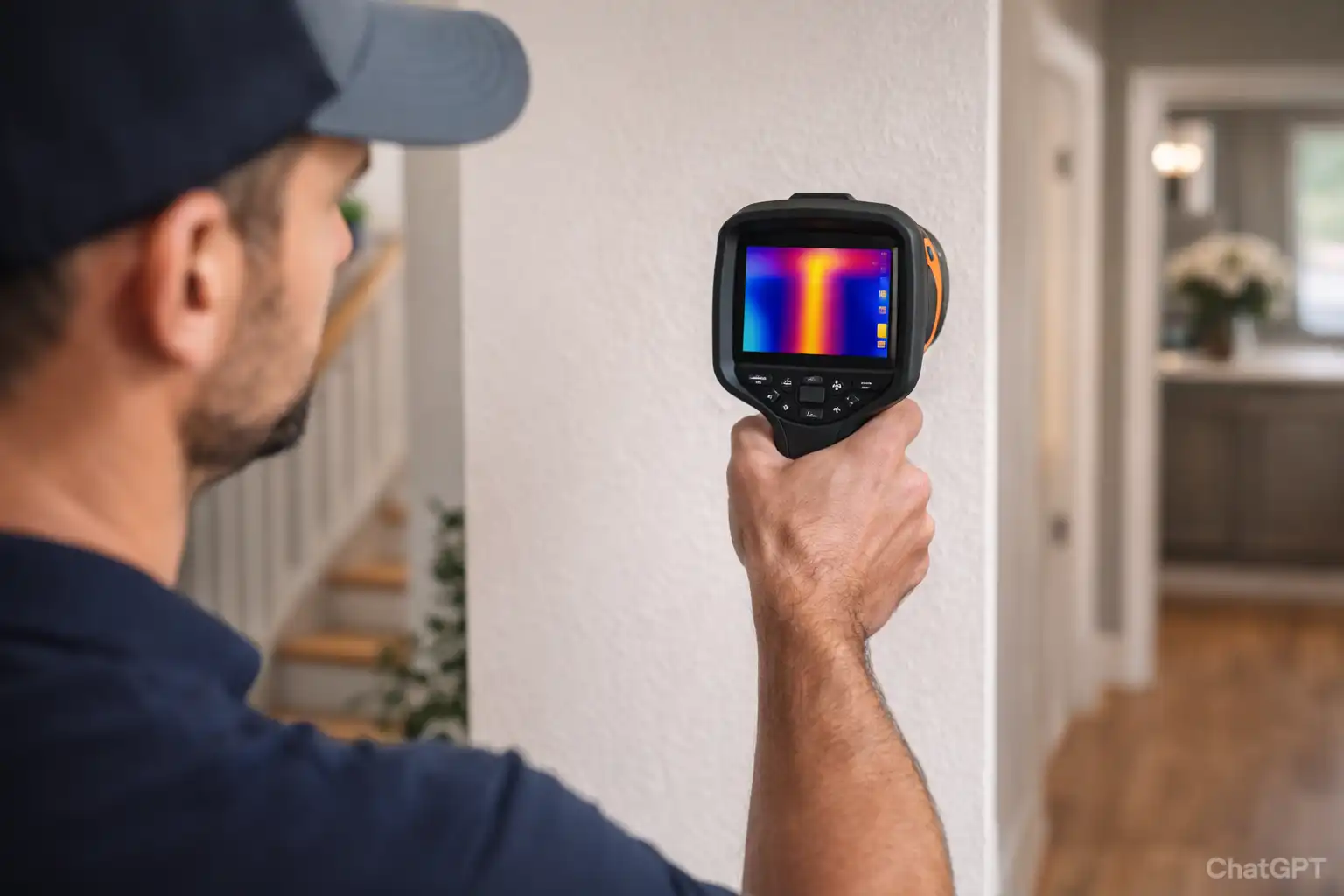
As the camera moves, high-resolution footage is displayed on a screen. The technician watches for cracks, pinhole leaks, roots, sags or blockages. Every time something important appears – like a cracked joint or a growing tree root – it’s noted. Many systems can mark the footage time-stamp or add an electronic marker on the video. If the pipe is full of water, the camera is still designed to work in wet conditions.
Location tracking:
Thanks to that built-in transmitter (sonde), the exact position and depth of the camera is tracked on the ground above. This means if the camera finds a broken section 15 metres down your pipe, the plumber can pinpoint it on a map or measure from a manhole.
Analysis and reporting:
Once the inspection is done, all findings are compiled. Any damage or blockage is logged with its depth and location. The crew generates a report – often with photos or video clips of the issue – and maps showing where each fault is. If nothing’s found, the report still confirms the pipe is clear. This report becomes the roadmap for repairs or ensures compliance with local regulations.
Let’s say you had roots in your sewer line. The camera might show a fuzzy tangle of tree roots in one spot. The team stops there, and notes “root intrusion at 8m from Manhole 2”. After, a relining crew knows exactly where to cut in or apply an anti-root treatment. It’s surgical precision, not guesswork.
In short, a CCTV camera pipe inspection is methodical: access, guide the camera, watch every inch, and document all defects. This thoroughness is why plumbers often liken drain cameras to medical endoscopes – they let us see inside “veins” of your home without opening you up!
Tools and Technology in CCTV Camera Pipe Inspections
The gear used for these inspections ranges from handheld units to robotic crawlers. Here are two common systems:
Push-Rod Cameras:
These are lightweight reels with a camera on a flexible rod – think of an angler’s fishing pole but with video. Push-rod units are perfect for small to medium pipes, crawl spaces or indoor drains. They’re easy to carry, handle tight spaces and send an instant image back. Plumbers use push-rods for typical household lines, bathroom drains and localised blockages because they navigate traps and bends well.
Tractor Cameras:
For bigger jobs, a tractor-style camera is used. These cameras ride on a self-propelled motorised crawler (imagine a little yellow tank). They’re built for large-diameter or long-distance pipes – like council sewers and stormwater drains in Perth. Tractor cams can push 100+ metres of cable and often have a 360° rotating camera head for full coverage. The cost is higher, but they deliver high-resolution inspection over extended lengths, ideal for industrial or municipal use.
| Feature | Push-Rod CCTV Camera | Tractor (Crawler) CCTV Camera |
| Pipe Size | Small to medium (e.g. home drains) | Large diameter (e.g. sewers/stormwater) |
| Mobility | Portable, handheld reel | Self-driven crawler on wheels |
| Reach | Short to moderate (tens of metres) | Long (100+ metres possible) |
| Best Uses | Tight indoor jobs, traps, quick checks | Extensive surveys, council/industrial lines |
| Cost | Lower-cost, less setup time | More expensive, requires skilled operator |
These cameras often record super high-definition video, so even tiny cracks or root threads are visible. Some devices even allow color grading or zooming in on the feed. In Perth, where pipes can be buried under sandy soil, having a camera that illuminates clearly is a lifesaver for plumbers.
When & Why to Schedule a CCTV Camera Pipe Inspection
You should consider a CCTV camera pipe inspection whenever something isn’t quite right with your drainage – or even before there’s a problem. Common triggers include:
- Recurring blockages: If a drain repeatedly clogs even after snaking, a camera finds out what is repeatedly blocking it (maybe a pipe dip or root).
- Slow drainage or gurgling toilets: These vague symptoms can be caused by partial obstructions or misaligned joints. A quick camera check often reveals the culprit.
- Unusual smells: If sewage smells linger, an inspection can locate cracks or breaks letting gases out.
- Buying/selling a home: Many Perth councils now require CCTV reports on stormwater lines before a new home is occupied, to prove everything was built correctly. Having a camera survey handy can boost buyer confidence.
- Post-repair verification: After pipe relining or repairs, CCTV ensures the fix was done right. Nuflow notes it’s useful to “validate completed works” – essentially quality control.
- Routine maintenance: Even healthy systems benefit from a scheduled check every couple of years. This preventive step catches tiny issues (like early corrosion) before they become a problem.
In Perth’s climate, certain factors make CCTV particularly handy. In fact, many Australian councils conduct regular CCTV surveys to assess stormwater pipe conditions, such as the Stormwater Pipe CCTV Survey by Camden Council, which demonstrates how local governments use this technology for long-term asset management.
The dry summers mean tree roots often seek moisture deep underground, invading pipes. Spring rainstorms can flush debris into lines. And in coastal areas, salt air can accelerate pipe corrosion. Rather than waiting for disaster, savvy homeowners and facility managers hire camera inspections as a precaution.
Also, if you’ve had landscaping or construction, the City of Perth guidelines remind builders that new drainage must be CCTV-checked before handover. Many plumbing companies simply include a camera scan in quotes when they find any repeating issue. It’s now standard practice, much like a mechanic using diagnostics on a car’s ECU.
Choosing a CCTV Camera Pipe Inspection Service
If you decide on a CCTV inspection, how do you pick a pro? Look for a reputable local plumbing or trenchless services provider in Perth who specializes in drain cameras. Here’s what to consider:
- Experience and equipment: Make sure they use modern CCTV rigs (HD cameras, push rods and tractors) and their tech is up-to-date.
- Accreditation: Some industries (like council works) require NATA-accredited inspections. (Ask if your job needs that.)
- Reporting: A good service will give you a clear report (video plus written findings). If they only say “Yes, it’s blocked” without details, that’s not sufficient.
- Costs and quotes: CCTV inspections vary in price. A small home drain might be a few hundred dollars, while lengthy multi-level systems cost more. But consider it an investment: preventing a full dig-out is often worth it. Many firms offer fixed rates for single drains.
- Local reviews and FAQs: Check online feedback (Yelp/Google) – customers often appreciate seeing footage. A company that educates clients (like showing them the screen) demonstrates trust.
When interviewing a plumber, you can ask: “Do you do CCTV camera pipe inspections?” If the answer is “What’s that?” run away. A modern plumber in Perth should answer with a confident description of how they can show you the inside of your pipes.
On the other hand, DIY CCTV kits exist, but they’re usually low-end and hard to maneuver in complex drains. For reliable results (and to reach deep into your plumbing), professional gear and know-how are generally worth the cost. In fact, some plumbers will even link the camera feed to your smartphone so you can watch alongside them – making it a true high-tech show-and-tell.
Future Trends: Tech in CCTV Pipe Inspections
Pipeline inspections continue to get smarter. A recent industry report highlights AI-driven analysis for CCTV footage. Imagine your camera roll snaking through a pipe, and software automatically flags a “high-confidence crack” or “root intrusion” on-screen – that’s emerging technology. This means faster diagnosis and fewer missed issues in the future.
Another trend: cloud reporting and GIS mapping. Modern systems can upload footage and maps to cloud platforms, so multiple stakeholders (homeowners, councils, engineers) see the same data in real time. For Perth, this could mean your local council plumber and your home plumber are literally reading off the same page. It’s already happening with assets management tools like WinCan Enterprise used in Australia.
So, CCTV camera pipe inspection is no longer an “old plumber’s trick” – it’s a cutting-edge tech solution that keeps evolving. In the next few years, even more miniaturized cameras, better lighting (like 4K sensors) and smarter analysis are likely. In short, the future is bright (and clear) for your drains.
Conclusion
CCTV camera pipe inspections have revolutionized how Perthers handle their plumbing woes. They let you peek into your pipes before chaos erupts – saving time, money and trees (literally, no more digging up roots!). We’ve seen how this technology works step-by-step, how it finds leaks and blockages, and why even the City of Perth trusts it. By hiring a skilled plumber with the right camera gear, you get an instant “X-ray” for your pipes: showing cracks, corrosion, roots or debris in real time.
Next time you wonder why your drain is slow, or if your home project needs that final check, remember CCTV camera pipe inspections are your best friend. Embrace this non-invasive wizardry and nip plumbing mysteries in the bud. If you’re curious or facing a leak, call a local CCTV inspection specialist – it might be the most illuminating move you ever make for your home.
In cases where a CCTV camera pipe inspection confirms a leak, professional hot water leak repair in Perth helps restore the system and prevent further water loss.
FAQs
What is a CCTV camera pipe inspection?
It’s when a tiny camera on a cable is sent into your pipes to show the inside on a screen. This lets plumbers find leaks, cracks or clogs without digging.
How long does it take?
Usually 30–60 minutes for a typical residential drain. Longer for complicated systems. The crew sets up, feeds the camera, reviews footage and gives you a report.
How much does it cost in Perth?
A rough range is $200–$500 for a standard home drain check. Prices vary by length of pipe and complexity. Think of it as an investment to avoid a bigger bill later.