Holding an unyielding, high-performance heating loop is what keeps your morning shower runs and domestic chores moving like clockwork.
The catch is that every storage cylinder slowly packs out with hard calcium flakes, suffers structural fatigue, and bleeds thermal velocity over the quarters. Staying disciplined with scheduled hot water tank maintenance traps these system stresses early, cutting out massive emergency parts bills before they puncture your budget.
Down across our coastal postcodes, shifting seasonal temperatures paired with mineral-heavy bore or reservoir supplies dump an immense chemical load straight onto your copper elements and internal linings. Because of that hard water profile, booking regular hot water system servicing shields your core capital assets while securing flat, predictable thermal output through the worst winter gales. Taking ten minutes for small logbook tune-ups completely blocks catastrophic structural blowouts and slashes your rolling power draw.
To add to that, keeping your reservoir clean lets the system hit its target temperature markers lightyears faster without forcing the heating rings to pull maximum amp draws under heavy strain.
Landlords secure a huge financial dividend by flattening their annual plumbing invoices and locking down rock-solid plant uptime. Instead of sitting around waiting for a total mid-winter structural failure, tracking a planned hot water tank maintenance matrix guarantees elite long-range performance while stretching your hardware lifecycles out to the max.
Why Hot Water Tank Maintenance Matters for Every Home
Many homeowners rarely think about the hot water system until cold water suddenly appears. Unfortunately, hidden problems often develop long before visible signs become obvious. Committing your property files to routine hot water tank maintenance smokes out microscopic corrosion tracks early while throwing an ironclad shield over your delicate internal valves and steel linings.
Heavy mineral grit inevitably drops out of the water column to form a dense, calcified blanket right over the bottom of the cylinder. This rocky blockage effectively suffocates the lower burner or element, forcing the system to draw double the energy just to push heat through the sludge, an operational bottleneck that drives your monthly utility bills straight through the roof until a deep system flush cleans out the barrel.
A non-negotiable checkpoint during your hot water tank maintenance run is running a full functional verification over the temperature pressure relief valve. This critical spring-loaded mechanical gateway prevents your high-temperature cylinder from turning into a literal structural explosive hazard, meaning a binding valve introduces extreme risk and can easily warp your pipe joints under heavy expansion loads.
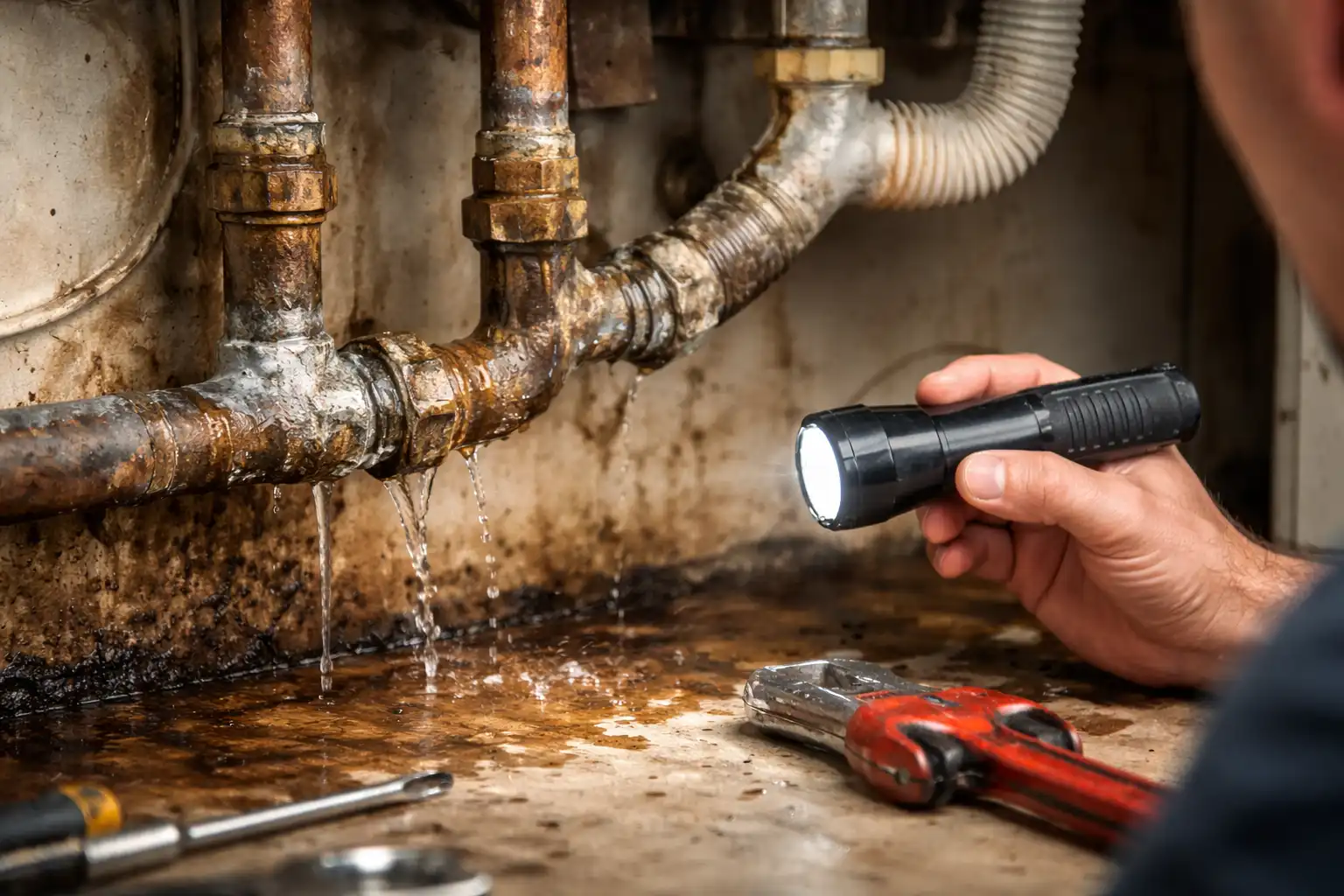
A ticketed trade look-over focuses heavily on mapping out green oxide scaling or weeping moisture lines around your brass nipples, isolation rings, and tank seams. Substrate rust moves on a slow, creeping timeline, but catching a pinhole weep early stops you from having to dump thousands of dollars into a complete tank replacement project. Plus, auditing your foam jacket insulation and exposed copper runs stops massive parasitic heat bleeding completely on autopilot.
Routine servicing delivers several valuable benefits:
- Reduces energy consumption.
- Extends equipment lifespan.
- Prevents unexpected breakdowns.
- Improves water heating performance.
- Lowers long-term repair expenses.
Sticking to a rigorous hot water tank maintenance contract is also your ultimate insurance shortcut to keep your factory product protection 100% airtight. Major hardware brands will ruthlessly discount any replacement claims if you can’t hand over signed trade logbooks showing consistent hot water tank inspection dates, proving why basic checkups harden your legal asset defense while optimizing system delivery.
Common Maintenance Tasks That Extend System Life
Your thermal network relies on a highly specific group of interlocking valves, sacrificial bars, and controllers working in perfect harmony to handle the daily load. Running a regular hot water tank maintenance pass targets these specific wear zones while they are still simple ten-minute adjustments instead of letting them rot into a catastrophic failure.
The central magnesium or aluminum sacrificial anode performs massive protective lifting inside the fluid core, behaving like a literal lightning rod for electrolysis and oxygen attacks so the main steel shell doesn’t get eaten away. Over the months, this soft alloy core systematically dissolves down to the wire core, meaning that letting it wear out completely passes all that aggressive corrosion straight onto your main internal tank walls.
Dialing your temperature gauges up to a scalding peak accelerates internal structural scaling while throwing massive expansion stress onto your copper weld lines. Tuning your internal thermostats back to a logical sixty-degree benchmark optimizes your monthly utility usage, while Hot Water Tank Maintenance also stops the internal elements from frying themselves under constant high-load cycles.
Tracing your manifold connections is another key check item, given that continuous thermal pulsing slowly backs off compression nuts and degrades thread sealants. While a tiny drop looks harmless on day one, Hot Water Tank Maintenance helps identify hidden leaks before that constant background sweating ruins your external pipe covers and speeds up rust across adjacent wiring terminals.
The table below outlines common maintenance activities and their benefits.
| Maintenance Task | Purpose | Long-Term Benefit |
| Tank flushing | Removes sediment | Improves heating efficiency |
| Anode rod inspection | Prevents corrosion | Extends tank lifespan |
| Pressure valve testing | Maintains safety | Prevents pressure damage |
| Thermostat check | Controls water temperature | Reduces energy costs |
| Leak inspection | Identifies water loss | Prevents structural damage |
| Heating element inspection | Maintains heating performance | Improves system reliability |
Signs That Hot Water Tank Maintenance Is Overdue
Your service yard layout almost never drops offline out of nowhere without throwing a few explicit acoustic or visual flags onto your radar first. The trap is that a stack of residential operators ignore these warning indicators until their subfloor is completely flooded, whereas running a targeted hot water tank maintenance schedule flattens your ongoing trade overheads by trapping faults early.
Catching weird metallic popping, gravelly rumbling, or deep cyclic thumping from your utility cupboard means a thick bed of calcified silt is actively cooking at the base of the cylinder. As the burners fire, trapped steam pockets violently burst through the mineral crust, an operational bottleneck that forces the system to draw massive extra megajoules just to hit standard shower metrics.
Catching a murky yellow or orange tinge rolling out of your bathroom taps is a major red flag showing that your internal steel walls are actively scaling away or your legacy copper lines are breaking down. Staying disciplined with a structured hot water tank maintenance program lets you dump the tank core and catch this substrate decay before the entire cylinder casing lets go.
Dealing with frantic hot-to-cold swings right in the middle of a wash indicates that your internal mechanical linkages are hitting a wall, pointing straight to calcified element sheaths, lazy capillary thermostats, or severe calcium blockages. Squeezing early trade tuning into your schedule resets your system parameters to factory spec before you are forced to fund a complete structural overhaul.
Spotting a pool of water gathering around your safety tray or seeing a continuous drip out of the discharge line must never be left to track down in the dark. Background moisture logging systematically rots out your internal framing timbers, destroys wet-area plasterboards, and feeds toxic black mold clusters right behind your structural skirting zones.
Benefits of Professional Hot Water Tank Maintenance
While a casual glance over the external insulation jacket checks off a basic box, booking a credentialed trade van unrolls a lightyears deeper engineering review of the layout. Fully ticketed specialists analyze precise fault loops, loop resistance, and hydraulic pressure boundaries, mapping out background line anomalies that an amateur would completely miss.
Authorized hot water tank maintenance kicks off with an intensive, multi-point visual and electronic audit over your sub-mains links. Every dual-pole isolator, mechanical diaphragm, copper element array, control dial, and vacuum relief module undergoes strict technical tracking to trap creeping component decay long before it can launch a major billing shock.
A major dividend of choosing a specialist trade crew is access to high-velocity hydro-flushing rigs that can scour set-in calcium mud clean out of the tank bed. Standard domestic garden hose drains lack the velocity to dislodge packed scale, whereas commercial pumps flush the inner tank walls spotless to restore perfect thermal conductivity, while Hot Water Tank Maintenance helps stop heat fatigue on your metal work.
Your mechanic will manually actuate and drop pressure test gauges onto your main safety manifold during every single service window. This unyielding testing loop, supported by Hot Water Tank Maintenance, confirms that the over-pressure port snaps wide open exactly on its legal bar limit, completely eliminating the threat of a full-scale physical explosion inside your utility cupboard.
The following table highlights the difference between neglected systems and regularly serviced systems.
| Feature | Regular Maintenance | No Maintenance |
| Energy efficiency | High | Gradually decreases |
| Heating performance | Consistent | Uneven temperatures |
| Repair frequency | Lower | Higher |
| System lifespan | Longer | Shorter |
| Operating costs | Reduced | Increased |
Reliable Hot Water Tank Maintenance also supports long-term budgeting. Instead of facing sudden replacement costs, homeowners enjoy predictable servicing expenses while extending the useful life of existing equipment. For additional guidance on maintaining residential hot water systems, consult the Australian Government’s energy efficiency information.
.
How Scheduled Maintenance Saves Money Over Time
Many property owners delay servicing because the system appears to operate normally. However, hidden wear continues every day. Over several years, neglected maintenance often creates repair costs far greater than routine servicing expenses.
Staying disciplined with your regular hot water tank maintenance loops systematically drops the thermodynamic load, crushing your internal copper cores. Squeezing out that operational friction means you aren’t constantly burning through spare components over the multi-year cycle, keeping your family safe from sudden mid-week cold shower shocks.
Maximizing your heat transfer capabilities keeps massive cash inside your business or household accounts down to the dollar. A lime-free cylinder brings your fluid up to temperature within minutes without drawing excess current, ensuring your compounding monthly utility drops pay off the initial trade maintenance outlays completely over the fiscal year.
Keeping up with your logbook servicing routines stretches your actual system longevity out to the absolute max. Having to fund a complete multi-thousand-dollar emergency hot water system replacement from scratch is a massive hit to your capital, but running periodic structural checks lets you push that heavy replacement invoice decades down your balance sheet.
Small maintenance investments often produce substantial long-term savings. Instead of reacting to emergencies, scheduled Hot Water Tank Maintenance keeps the entire system operating safely, efficiently, and reliably throughout every season.
Conclusion
Holding flat, unyielding temperature metrics is a core component of daily lifestyle comfort, and tracking regular hot water tank maintenance is your absolute highest-yield tool to hold that system baseline.
Preventive trade care systematically flushes out heavy calcium mud, seals out oxygen scaling along the weld seams, dials up your heat recovery speeds, and crushes excess power draw. Plus, programmed line checks smoke out early joint sweating before you get hit with a high-cost emergency hot water system repair bill.
Sticking to a disciplined servicing rhythm stretches your multi-year material longevity out to the max while wrapping your high-end internal elements in a permanent defensive shield. Skipping the chaos of sudden baseline blowouts means local landlords score a bulletproof, turn-key hot water supply 365 days a year. Master trade execution keeps your manufacturer files valid, drops user risk metrics to zero, and unrolls absolute peace of mind for your asset portfolio.
No matter if your home layout carries a brand-new high-efficiency star-rated system or an aging storage cylinder that has ground through a decade of service, investing in routine hot water tank maintenance stands out as your single highest-yield strategy to secure your property capital.
Get a quote today to schedule professional servicing and help maximise the life of the hot water system. Get in touch today to arrange a thorough inspection, improve efficiency, and keep reliable hot water flowing for years to come.
Frequently Asked Questions
How often should Hot Water Tank Maintenance be scheduled?
Most storage hot water systems benefit from professional Hot Water Tank Maintenance every 12 months. Annual servicing helps remove sediment, inspect safety components, improve efficiency, and identify developing problems before they become expensive repairs or unexpected breakdowns.
Does Hot Water Tank Maintenance reduce energy bills?
Spot on. Committing to consistent hot water system servicing strips out the thick mineral crusting that starves your heat transfer links, allowing your compression loops and burners to hit their target metrics without drawing excess current, a precise trade process that keeps your monthly energy accounts beautifully lean.
Can Hot Water Tank Maintenance extend the lifespan of a hot water system?
Upgrading your real estate portfolio folder with structured, regular water heater maintenance halts galvanic tank rot dead and prevents premature element burnouts, handing local families a drop-proof hydraulic blueprint engineered to run smoothly through every season.